Showing posts with label Being a Parent. Show all posts

Tuesday, September 20, 2011

Meet Little Rosebud...

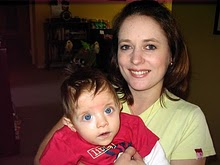
It is my great privilege to visit  Grietjie's blog and share with you the birth of her little Rosebud! The newest addition to her already beautiful family was born yesterday afternoon, she is a gorgeous, healthy, perfect little girl and we thank our Lord and Father for keeping both of them safe during the delivery.

Congratulations to both Grietjie and Mike, may God bless you and your beautiful little girl!  Congrats Sweet Pea and ArrowBoy on a gorgeous new  baby sister!

Loads of love
Trudie {Fun with Little Mouse}

Tuesday, September 14, 2010

Moral Intelligence


I have written here before about my friend Nicky and her beautiful little boy, Sam, who has Rubenstein-Taybi Syndrome. Nicky published a post about moral intelligence on her blog over the weekend, that really touched me tremendously and had me sit down and ask myself some hard questions about teaching my children about empathy, respect and compassion. Please visit Nicky's blog to read the article - you can click here and it will take you straight to the post.

Thursday, September 9, 2010

The Hansel and Gretel method! (Part 2) - strewing their paths with EXPERIENCES

HAPPY THOUGHT

The world is so full of a number of things,
I'm sure we should all be as happy as kings!
~ Robert Louis Stevenson ~

In my previous post, I quoted Susan Dodd as she defined strewing.  But in her definition she also included another way in which parents can draw their children into new learning experiences, which I'd like to share with you here. She said:

 "...But there's another element which isn't physically "strewing" but involves instead taking the children out and about with the idea of their seeing (hearing, tasting, smelling, touching) things they might not have come upon otherwise and that you can't lay casually about the house.


Sometimes it's just as simple as driving another route to the same old place, or going to a different grocery store than usual. Other successful outings of note which I consider in the same category as strewing (though not the same action), include

*construction sites
* any public doing like racing remote control things in a parking lot or vacant lot—just passing by
   is sometimes sufficient without even stopping
* concerts
* fleamarkets
* garage sales
* new stores just opened
* old stores in danger of closing (take them in before it's gone)
* prairie dog towns
* vacant lots with wood we can pick up for firewood


And with ALL those things, we get time together, shared experiences and conversation...."

The best 'field trips' are free and happen on the spur of the moment, and these are the ones that usually makes the biggest impression on my little ones. I think it is because these are the kind of experiences which deal with real life, everyday-in-action. Just this past week we've had some super little trips, mostly impromptu and never intended as 'educational' at first, but they turned out delightfully engaging nonetheless:

Some municipal workers were felling trees just up the road from us. We were kissing the Dad goodbye when I heard the unmistakeable sound of chain saws, and since mama's on a mission (more about that in a later post) which requires some nice logs, I quickly bundled the bambinos into the car and off we went in search of the scene of the crime. The children were fascinated by the whole business: the saw, the branches falling, the way one man was hoisted into the tree by the others using a thick hemp rope...even the orange road cones which were placed on the sidewalk piqued their curiosity!

On the same day we visited a new co-operative store which opened at a small shopping centre in our neighbourhood, and spent a very interesting half an hour exploring everything from gigantic gumboots, to secateurs, to paint swatches and birdseed. Oh, the questions a little girl can ask when the world is so full of such wonderful things!!

On Saturday afternoon we took a quick trip to a friend's farm just outside of town to pick up more logs (are you curious yet?? ) and saw a lamb with a broken back leg in a cast (this became a topic of great concern and interest for the next 48 hours!), triplet lambs, and two pouncing puppies. We had to stop to chase some sheep out of the way, and had a ton of fun crawling and climbing over a pile of  logs and tree stumps - great gross motor excercise and sensory stimulation galore!

And they are building a new road just down the road from us, and just from passing by there every few days, my daughter has already learnt the difference between a grader and  an excavator, and is seeing for herself how a road is built! We stop in the parking area of the shopping centre across the way, and wave to the construcion guys, and chat about how much further they are a long than when we came past here last time.

We all have access to these rich 'learning grounds.' It is just a question of whether we will stop, take the time to explore and answer the myriad of questions that will inevitably be pouring out of little minds when presented with such utterly interesting opportunities! What experiences are waiting in a 5km radius from your house to be explored by inquiring young minds??

Here are some very simple ideas for interesting places to visit with your little ones:
  • The Post Office - you can even write a letter to a grandparent or friend and let your child buy a stamp and mail it!
  • Your local library. I will never cease to be amazed at how few mothers take their children along to go take out books!
  • A local nursery or garden centre - oh, the wealth of things to explore: big bags of potting soil stacked high, smooth pebbles, garden tools... Don't just head for the kiddies play area and then leave when they are all played out. Look at and discuss and let them touch different kinds of plants: succulents, mosses, vegetable seedlings, shrubs.  
  • A train station!
  • A butchery / bakery / florist - with everything available pre-packaged and ready to go in the almost generic environment of supermarkets, specialist shops are a real treat!
  • A church bazaar / school fete / community fair / farmer's market - pay attention to the posters on the lampposts, you will be amazed at the array of interesting things happening in your area!
  • Cat and dog shows, or you can even just stop to watch when you see a doggy training class in progress.
  • Or how about just talking to them about what is happening at the petrol statoin while you are there for a fill-up?!
  • My children LOVE going through the car wash!
There is wonder and beauty and breathtakingly interesting things all around us - it is our priviledge as parents to open these doors to knowlegde to our children!

Monday, September 6, 2010

The Hansel and Gretel method! (Part 1)

 In an earlier post from this week I mentioned the idea of strewing as a way I use to expose my children to new and interesting things, and I thought it well worth another mention, since it is such an effective way of broadening your little ones' horisons, and for getting them interested in things they would otherwise have shown no interest in!

   Point in case: a client of mine stopped by last week to pick up some educational toys she had ordered for one of her children. We stood chatting a bit about educational toys and how to get children interested, and I shared with her my ideas about strewing, i.e. leaving things out for the child to discover on his own. I advised her to not make a big deal about the 'brand new educational toy that mommy has just bought for you to practice your pen grip'...but instead to not even tell the child about it at all. Instead, I suggested that she took the peg board set out the following day, and place just the peg board and some pegs out on a tray  where the child would easily see it. If he was curious enough, he would explore it on his own - the best way to learn!! Then, I said, it would be a good idea to put it away for a few days. Next time she takes it down, she should once again put it out on a tray, but this time, add two or three of the pattern cards that came with the set, again just leaving it out there for the child to explore when he is ready. I received an e-mail for her today to tell me how well it has worked!

  A lady by the name of Sandra Dodd is the author of the first article I ever read about strewing. I loved the idea of unforced, child-lead learning that it presented. Someone asked her to define strewing, and I share this snippet from her website, on "Strewing their paths":

What I was referring to was leaving things around and changing them out.

Some of our most successful items have been toys or objects for playing with (sometimes not purely a toy) like
pattern blocks
castle blocks
magnets (or some new magnet toy where something swings or moves)
a prism
odd little crafts things with some tactile element people will just HAVE to pick up and mess with (fuzzy, furry, slippery, gummy...)
printouts of good cartoons or little articles or humor lists (generally taped inside the bathroom or left on the counter there, or on the dining table)
new foods, snacky stuff, in a bowl, out
interesting rocks, rinsed, in a bowl, on the table


     It is important, though, to interject here and emphasise that this does not imply one has to cram every imaginable surface chock-a-block with activities or things for your child to 'discover'. In fact, a more minimalistic, but dynamic, approach seems much more effective. For example, many children have heaps of toys that are kept in a large bin or toybox in either their bedroom or the living room. And when the child is bored and disinterested, her parents cannot understand why: she has all these hordes of wonderful toys!! Ah, but how absolutely devoid of any opportunity for discovery and imagination is such a set-up. It does not appeal at all to a child's natural curiosity; it does not invite him to discover, to investigate; it leaves no room for wonder or amazement. It is just a heap of toys - the same, day in and day out. Remember the old saying, familiarity breeds contempt? Well...if it applies to people, most of whom are at least somewhat different from one moment to the next, how much more would that be true of inanimate objects?

   I think the true value of strewing is dependent on three factors: keeping in touch, keeping it 'fresh', and minimising distraction. Here are some suggestions to attain this:

1. Keeping in touch: know your child's current interests
Jelly fish are a big hit around here these days, as are anything relating to penguins and birthday parties, and Sweetpea LOVES cutting things with her small scissors! ArrowBoy is big into containers with lids and throwing small objects into larger containers, as well as opening and closing drawers. I try to flow with their interests, drawing them in deeper with well-chosen books and activities. (I love being 'available' to my family in this way - isn't it just such a priviledge to observe so closely the passions and pleasures as your child discovers the world? And then to be right there to 'open the door' a little bit more, showing them some new and breathtaking wonders!)

I try to keep a balance between fuelling current interests and introducing new ideas. Today was a particulaly blustery day, for example, and the perfect opportunity to start wondering out loud about the wind and where it comes from!


2. Keeping it 'fresh' : Rotate your child's toys and other interesting materials 

   - I use labelled plastic bins (5 liter ice cream containers I bought from the plastics shop for about R8 apiece). I used inexpensive labels to label them according to the days of the week. Sweetpea's Monday bin has a set of natural wooden blocks, small wooden dolls and two cars, while on a Monday ArrowBoy gets to play with his hammer and ball set, his Sort and Play bucket, and a simple knob puzzle.

   -  I also have a printed sheet on the inside of their closets where I have listed, according to the days of the week, which other toys and games to bring out that are too big to fit in the ice cream containers.

   - Now, again, I don't just dump all of this on the living room carpet first thing in the morning. Some of the activities are placed out on trays for Sweetpea to 'discover' during the day. I may put a peg board and some pegs in a tray on the kitchen counter, and leave out two or three books on sea life on the little table in her bedroom, maybe together with a few small platic fish and other sea creatures she is bound to find on the pages of those books.

   - When they tire of whatever it is they are plaing with, I can always quietly pack that toy away and go to my list inside the closet to check what else they haven't played with for a while, and set that out.

   - Remember that the fact that they haven't seen a cetain toy for a while, does not automatically guarantee they'll be interested in it today. Our children are individulas, just like you and I, who may just not be in the mood for the pegboard today. That's OK. If you have chosen well, there will be more than enough alternatives for them to choose from elsewhere in their playing  and learning environment.

3. Minimising distractions: Less is more

I am by no means the world's most organised person. On the contrary. But I also know that I function much better, feel much calmer and more contented, and are able to focus more joyfully on things I am busy with, if my environment is uncluttered and 'quiet'. The same applies to my children.

We live in a small house, and if the living room floor becomes too cluttered with toys, my children's playtime becomes marked with irritation. If the house is tidy, though,  and there is one kind of toy on the carpet (this can be a single toy, or a collection like a playmat and cars, a few small wooden dolls to ride on them, and even an empty box or two that serves as a house!), a skill toy on the kitchen counter, a few books on a night stand and a 'changing station' for baby dolls set up in the bedroom, my daughter can freely move about the house and find something to pique her interest in almost every room!

****
I am aware that as you are reading this, you may feel that what I am talking about involves a lot of work. On the contrary: It took me about two mornings to organise our toys into daily containers and  draw up the closet door list, and since then I seldom struggle with bored children and having to rack my brain to come up with something to keep them busy with. It also does not take away spontaneity - in fact, 'strewing their paths' with good quality toys, books, and things to explore, opens up many, many doors for spontaneous learning - for all of us!

In closing, may I encourage you with a quote from Rose Kennedy:

"I looked on Child-rearing not only as a work of love and duty, but as a profession that demanded the best I could bring to it"

Sunday, September 5, 2010

Tripping over milestones


        Have you ever found yourself at the well-baby clinic for a baby's check-up, and while the nursing sister is busy filling out your child's chart, your eye catches the large poster on the wall, listing the developmental milestones children should have reached at various ages? It doesn't matter how big the writing is that says that those are just guidelines - all of us in that situation will do a quick mental check to see how our little ones 'measure up' ...and woe to you if your 18 month old can only stack 2 blocks instead of the required 4....or even worse - you never even knew he was supposed to be stacking blocks in the first place and now he's almost two already and oh my, how will this affect his future academic performance...and if you didn't know about the stacking, what else is there that you don't know???

    A while ago my friend Nicky published a post about how she just about worked herself into an anxiety attack after watching a TV program about the developmental milestones of one year olds. Nicky's youngest son, Sam, has a condition called Rubinstein-Taybi Syndrome, more of which you can read about on her blog, which is aptly named I AM SAM...THE CONQUEROR! Anyway, here is a snippet of what Nicky wrote that day:

       "I am not sure if it was watching that documentary or something else completely but over the past few days I have found myself frantically trying to help Sam "catch-up" to where he should be developmentally...and it is EXHAUSTING! Now, let's first understand that Sam is nowhere near being neglected or ignored, he is 95% of the time either on my arm, in his pouch, on my lap or attached by some other means and I talk to him constantly, we sing...we dance...we play and I've been fairly satisfied that he is getting a considerable amount of stimulation - but all of a sudden it hasn't felt like enough, to the point where I started timing the periods in between interacting with him, for example, I put him him down so that I can attend to something quite basic, like brushing my teeth, (I have an OCD thing about teeth-brushing...it has to be done for a precise amount of time, in a particular way, a particular order, etc) but then I start thinking like "Okay, he's been in his cot now for like 3 minutes - is it okay for him to have no stimulation/interaction for three minutes?" and then almost every morning I land up standing next to his cot, spluttering some-or-other kiddies song through mouthfuls of toothpaste. Another example - I take Sam for a walk in his pram most afternoons. We only walk for about 30 mins and he usually kips for most of that time, but yesterday afternoon he didn't fall asleep AT ALL and I kept looking into the pram and he just appeared to be staring into space and I started worrying about how long it would be okay for him to just lie there and found myself hurrying the walk up, just to get home and onto something else. And that's basically the essence of how our days are being spent....okay, we've sang songs now for twenty minutes, time to press buttons on Noah's Ark to hear the different animal sounds...okay, time now to walk around the house and point out different objects and say their names...it's like running an endless race."


     Can you relate? I could, and I am certain that there a many mothers out there, especially first-time moms, who know exactly what we are talking about.

     I have not yet completely overcome this ridiculous tendency to want to stimulate my children all the time, but I have definitely relaxed a lot more about it. What has helped me a lot is, first, the idea of 'strewing', i.e. leaving things out for my children to discover on their own time, at at their own pace, and secondly, being OK with it if they are not interested or adept yet. The idea of 'natural', unforced learning really appeals to me, and motivates me to create a rich, yet comfortable environment for my children to spend their days in.

 More importantly, though, is that I think we underestimate the tremendous influence our mere presence during the busy hours of every day has on our children. Here is how I commented on Nicky's concerns about Sam:

   "Think about it: you spoke to Sam today, casually pointing things out to him or describing what you were doing. You were 'bathing' him in language, all the while 'teaching' his brain complex things like grammar and syntax and rhyme! He hears the changes in intonation as your emotions change - I can hear mommy is happy now, or oh, now she is upset with the dog! Carrying him on your hip from bedroom to living room in the normal course of the day, everyday, you are helping him make sense of his spatial environment (a mathematical skill!) You stimulate his senses by having him in the sling while you cook: he smells and tastes the food, he hears all the kitchen sounds and feels the sway of your body, and what a visual feast is there to be had in the beautiful colours of food! And about that walk in the stroller: you know, my *normal* one year old also just usually lays there. But even if he seems totally oblivious, his inner-ear, the part that helps with balance, is registering changes in road surface: now we are on gravel, now on grass. And besides, what can be more educationally valuable than quietly taking time to just stare at God's beautiful blue heaven!"

     Of course I am not saying we shouldn't also challenge our children, and I feel very strongly about being intentional in providing them with a rich but well-balanced learning environment, but we should also not underestimate the learning that takes place, without us knowing it, in the course of a *regular* day when we are not intentionally trying to teach them.

      I read an article a while ago that encouraged moms to make a "have done" list at the end of each day, as opposed to a "to-do" list at the start of it. I think if we all go write down everything we DID do with our little ones today, we will amazed at the learning opportunities we have created for them just by having them with  us. Yes, by all means, let us read and learn and empower ourselves with knowledge about how to help our children become the best they can be. But NEVER because we want to keep up with a chart on a clinic wall, or with someone else's child. NEVER because we think our children's performance will reflect well on our parenting skills. NEVER at the expense of childhood joy and freedom and unconditional love and acceptance. Let's not trip over milestones. If they become a distraction on your journey to the point where all you can see is the next milestone, it may be time to take the scenic route: the fun, beautiful one that slowly winds its way through lovely scenery.

Monday, May 10, 2010

Teddy Bear emotions

I promised you a few posts on emotional intelligence, and want to start off with sharing with you about two games that has helped Sweetpea a great deal in the way of naming emotions.

They are called Bear Pairs and Rainbow Bears, and I bought these as part of my 'kit' when I became a consultant for Play2Learn educational Toys at the beginning of this year. They are made by Smile, so you know it is good quality and well thought through!

Anyway, like I said, they were intended to be part of my 'business' toys and not for my own children to play with. But as I very quickly realised, I simply cannot sell something to a mother if I don't know from personal experience that it is a good product, so I took it out one afternoon to see how Sweetpea would take to them. They have been a hit eversince (and not in the way you'd expect...as you soon will see!)

Bear Pairs is made up of 12 sets of bear shaped cards. We started playing the simplest game first: finding each bear's match! I laid the bears on the carpet and Sweetpea would search for the matches. (Great for visual discrimination AND midline crossing!) The next step is playing that classic memory game where all the bears face downwards and you turn over two at a time, trying to remember where the match is. (The bears are all cut from the same die, so the child can't guess by means of the shape.)

Just a sample of the bears from the Rainbow Bears game

Rainbow Bears is intended as a game for teaching primary and secondary colours. Two of the bears have spinners on their bellies (primary colours and black and white, and secondary colours and black and white), so the children spin and then pick a 'button' in the matching colour to place on the corresponding dots on their bears' bellies. Both sets come with instructions for several variations of these games.

But what has this to do with my two-year old and her emotions? Well, you will notice that the bears from both sets show a beautiful range of facial expressions. When we first started playing with these, we spent a lot of time talking about each bear, its expression, its clothing etc, and made up stories about why they felt like that. The bandaged bear was an instant favourite with Sweetpea, probably because she could relate to having bumps and bruises!

It was shortly after I introduced this game when she one day told me she was feeling sad. I realised that she had never used that word until we first played with the bears, so I picked a few of them with expressions that I thought she could relate to, and kept them next to her bed. Whenever she experienced an intense emotion, I pointed it out to her by showing the corresponding bear and talking about it!

Words are such a powerful tool: imagine feeling something overwhelming - be it joy or anger or sadness or excitement - and not being able to communicate it to the people you share your life with. When we teach our children the appropriate names for their emotions, we empower them. We can then help them to cope with those emotions in a healthy , positive way.

I want to add here that I am also training my children not to 'wallow'. We do not tolerate whining, and try not to indulge dramatics (my daughter is a little prone to exaggerations - she does have half my genes, after all!) If a child bumps a head or stumbles, I try to resist running to their rescue immediately (unless it's justified. However, I am always amazed at how quick they recover when no one makes a tremendous fuss out of every little bump!). Instead, I want to teach them to deal with it, and then get on with life. Joy is encouraged around here, and although feelings of real, legitimate sadness, fear, anger etc, are recognised and allowed, we aim to teach our children to work through negative emotions quickly and efficiently, so that joy and peace can be restored as soon as possible!

If you think your child can benefit from the two games mentioned above , you can order them from me via e-mail.

Monday, May 3, 2010

A shocking experience

It was my birthday last Thursday, and we spent that gorgeous autumn day in the Stellenbosch winelands amid vineyards exploding in hues of gold and mellow umbers. Lunch was had beneath the ancient oak trees at Boschendal, where the children played on the lush green lawns, picking up acorns and autumn leaves - ArrowBoy stuffed them in his mouth and Sweetpea studied them!

After spending the whole day out, my husband and I decided to skip our tradition of an intimate birthday dinner-for-two and rather stay in to watch a DVD together We sold our TV about a year and a half ago, beacause we just could not stand all the rubbish pouring into our home anymore. Instead, my darling bought us a very large computer screen, so we can watch a movie or two on a weekend.

So on our way home from that special day out, we stopped at the video shop. All four of us were there, still basking in the glow of a delightful day spent together as a family. The dad and I were finecombing the DVD's on offer in search of something 'clean' and enjoyable, and I was only vaguely aware of the noisy film that was playing on the screen above the counter. Sweetpea was sitting on my hip and I all of a sudden sensed that she was getting very agitated. Her eyes were glued to the TV screen and I as watched my precious daughter, I SAW the horror in her eyes and the terror that rose inside of her as she watched that screen. I immediately turned to see what was showing. The scene was that of a family driving in a car while an earthquake or something similar was tearing up the road right under them, with buildings crumbling all around and trees snapping like matchsticks. The father (I assume that's who he was - I have no idea wat the film was about) was driving, while the mother and little girl was in the back seat, screaming and clutching each other in the face of the pandemonium outside.

The next moment it was like a terrible bubble burst inside my daughter. Her breathing became rapid, her eyes filled up with tears and she started to sob: "It's breaking, it's breaking, Mamma! Everything is breaking!" She could not tear her eyes away from that screen. It took me only a moment to realise that to her, what was happening in that movie looked very real, and that it shattered her sense of security - everything that is solid and stable was crumbling; a man, a daddy, someone she regards as a tower of strength and protection, was looking scared and out of control; a little girl just slightly older than her was terrified, and a mother hysterical.

We immediately left the video store, my husband and I gently tring to soothe her back to calm and assuring her that everything was OK. She was crying out loud by now, and it took us another half an hour to help her see that all was well. Through her anxious tears she kept sobbing that everything was breaking...

We were really shaken up by this experience. I thought back to my time in America and the horrors of 9/11. I remember how the other students and I crammed into the cafeteria when the news broke of the terrorist attacks, and seeing those images on the TV screens. I remember how it took me a few moments to register that what I was seeing was REAL and not just a scene from another action movie. I chastized myself for not feeling horror straight away and it was then that I realized for the first time just how TV had numbed us with a barrage of violence that had become so commonplace that it didn't even shock us anymore.

The whole experience in the video shop last week has just convinced me even more about the necessity to guard my child's brain space.

Did you know that the French government has now BANNED the production of television programmes for children under the age of three, since data suggests that  exposing very young children to TV leads to learning difficulties? And that research now indicates that for every hour of television children watch each day, their risk of developing attention-related problems later increases by ten percent. For example, if a child watches three hours of television each day, the child would be thirty percent more likely to develop attention deficit disorder.--D. Christakis, Pediatrics, April 2004 . For more facts about the detrimental effects of television on children, click here

I also want to recommend the Plugged In  website (click on the link to take you there). This is a service of Focus on the Familt that provides EXCELLENT reviews on movies, music, games and more. My husband and I use this as a very reliable tool before deciding on an DVD.

Let us be vigilant in seeing that what we feed our children's brains are 'healthy', uplifting and GOOD!

Wednesday, April 14, 2010

Baby Einstein...or not!


A while ago I published a post about how you are the best gift you can give your child and the reaction I received, especially via e-mail and even telephone, was almost overwhelming! At around the same time I heard of a lady who is a staunch believer in the Baby Einstein DVD's - her toddlers spend up to four hours a day watching it. There is no way that a television and even the most professionally produced DVD's in the world can replace the learning that takes place as we spend time with our children.
They can't touch the colours on a TV screen, but they can when rolling play dough into little balls or snakes with mom.

They can't touch the fluffy little ducklings on the screen, but they can touch real ones on a weekend outing with Dad to the petting farm.

A DVD can show them an empty and full glass, but it won't register untill they are standing on a step stool by the kitchen sink while you wash the dishes, pouring the lovely warm rinsing water from cup to cup!

Anyway, back to Baby Einstein. I recently happened upon an article by Nikki Busch on her blog Bright Ideas Outfit. Nikki is considered one of South Africa's experts on educational toys and popular for her Toy Talk workshops.She cited a headline article from the New York Times that read No Genius in your crib? Get a Refund! It was about how Disney, the producers of the Baby Einstein series, is now offering refunds to parents who bought these DVD's as educational tools. You can read the article from the Times here - I highly recommend it. And for a brilliant example of how real-life, hands on education is benefitting one local family, check out my friend Linnie's blog post, The Learning Lifestyle.

Friday, March 26, 2010

A cot-free baby room

In a recent e-mail newsletter I promised to give you a little glimpse into the sleeping arrangements in our house, particularly about the baby room. I want to aknowledge three sources that inluenced me greatly in my decision to have a cot-free house: Firstly, my friend Linnie is a mother-extraordinaire and gave me good, solid advice about co-sleeping, especially in the first months. They have recently been blessed with another little boy, and she writes extensively about mothering this newborn on her blog .I also read two books at various stages during Sweetpea's baby days that helped me change my approach to sleeping issues. The first was Montessori from the Start by Paula Polk Lillard and Lynn Lillard Jessen, and the second was The Good Behaviour Book by William and Martha Sears.

 These three sources all had different and even in a way opposing ideas about where a baby is supposed to sleep, but I read and listened and in the end borrowed a little from all three and came up with a solution that works very well for our family.

Sweetpea slept in a wicker crib next to our bed for the first six months of her life, and then moved, without any drama, to a cot in her own room where she had also been taking her daytime naps since birth. When she was about 20 months old, we put her on a single bed mattress in her room, and a month or so later moved her onto her proper bed.
Sweetpea's room in the days before we went cot-free!

ArrowBoy was a sweet little newborn but decisively different from his sister in his need to be near his mamma all the time. I very soon realized that this little man needed to be close to me just about 24 hours a day and having learnt alot about mothering since the birth of his sister, I was happy to meet his needs in any way I could. He slept for long stretches during the day in a sling or kango pouch against my body, and at night he was snug as a bug between his daddy and me. But at around three months he all of a sudden started waking up if either of us made the smallest of movements or sounds, and my husband suggested we see how it goes if he spends the night in his own room. Now, from my end of the bed in our room to where his cot stood in hs room, was about 7 meters, and yet I spent that whole night fretting that I wouldn't hear him! Of course, he practically slept right through, except for a little feed at around 3h00 am!!

From then on he spent the night in his own room, but I was still not happy with the cot arrangement. Having read Montessori from the Start and agreeing wholeheartedly with their approach to encourge mobility so that the infant can move around freely, I found the cot restricting, despite it being much larger than a standard cot.

The bed in a Montessori room is basically a single bed mattress on the floor. It is pushed into a corner of the baby's room and is therefore protected at 2 sides. A soft rug or pillow can be placed on the 'open' side in case baby rolls off during the night. (My husband made a simple wooden guard which slid under the mattress to keep ArrowBoy safe until his brain has had a chance to 'map'the size of his bed!) Because baby is not restricted, he is free to start exploring his surroundings as soon as he is capable. To help him along in his efforts, a mirror can be bolted to the wall so that baby can see himself when he wakes up. This will encourage him to lift his head, strengthening his neck and back muscles, which in turn will prepare his body to crawl!


(There's a lovely example of a Montessori room at Sew Liberated !!)I love how these rooms are designed with a baby in mind, with shelves at their height, making it easy for the child to access his toys, and giving him something to pull himself up against.

Our son started crawling during the last week of his sixth month, and I attribute this in part to the fact that he has had the freedom to 'roam'. When he wakes up and start cooing, his sister stands on tippy toe, opens his door and joins him on his bed. They spend a lot of time playing happily together there, crawling on and off and tickling and cuddling. Off course, it is imperative to make sure the room is safe: that there is nothing a child can pull over on himself, no uncovered wall sockets, no small toys laying around on which baby can choke, no cords from blinds hanging at a level where baby can reach it, etc.


Not a great photo, but it shows how easy my boy gets off his bed

Another benefit of his comfy, big, baby bed is that I get to lay down with him if he is fussy at night - nothing like Mamma's body to comfort a little one! And I don't have to worry about my child tumbling out of his cot as he tries to climb out. (read more about head injuries caused by falls from cots and bunk beds here). We strive to enable our children to do things for themselves - thereby empowering them to not be so utterly dependant on others. ArrowBoy doesn't have to stand in his cot crying for someone to take him down so he can play. He can just slither off the side and find his toys, or, as is mostly the case, make his way over to the door and 'knock' on it to let us know he's awake now!

Friday, March 5, 2010

THE START OF GREAT THINGS

A few weeks ago I spoke to the mother of two grown children, who is considered to be one of the pioneers of homeschooling here in South Africa. We were chatting about questions I had about the social skills of homeschoolers and after she had laid my concerns to rest with wise advise that was born from experience, I asked her when is the best time to start home schooling. She gave an endearing chuckle and said: "My dear, you started the day your first baby was conceived."

In that moment, something 'clicked' in my head as I realised just how true that is!

Sweetpea, my gorgeous two-year old daughter, was conceived on the way back from a missions trip. During an eight hour drive earlier that day, her Daddy and I prayed what we called Two Kilometer Prayers: we would chat about something that was on our hearts and then pray about it for the next two kilometers of the drive. One of those prayers was to ask our Heavenly Father to bless us with a little baby girl. As I think back on that conversation, I realise that we had started what would become the training of our children in the car that day. We were laying the foundation for their education as we spoke about our ideals for and beliefs about child rearing. We were already setting up boundaries and formulating game plans and chiseling out a model for teaching and training that would eventually mould our family's own, unique character.

Off course, after Sweetpea's birth, some of these preconceived ideas were altered as we grew as parents and got to know the character of our little girl better and better And that process of 'alteration' happened easily and quite naturally at times, and on other occassions this tiny little person would just mercilessly smash our half-baked parental philosophies with a good dose of reality!

We listened to seasoned parents and read authors that we respected and studied God's Word for guidance and truth abour raising our children, and all the while we were training and moulding them already. I see now that education is not an event that starts on a specific day when my child turns a ceratin age or walk through the doors of a school. Training them and teaching them happens in every moment of every day.

My purpose with this blog is to document a little bit of the the learning that happens in our house. I love learning and borrowing inspiration from the thousands of very wise and creative moms out there who readily share their ideas on their blogs and websites, and I will give recognition to them whenever due. Since I am also a consultant for Idem Smile educational products, Play2Learn toys and games and the Suczezz range of educational tools, I will feature these products here, too. Especially those I use in teaching my own children. For the rest, I'll just be sharing my own experiences as I 'train up my children in the way they should go.' May you find my musings edifying and inspirational -  I look forward to receiving your feedback!

LinkWithin

Related Posts with Thumbnails